
* Disclaimer. Any information presented here about food, healing methods and services, is not intended to diagnose, cure, treat, prevent any medical condition or psychological disorder. Nor are they intended as a substitute for seeking professional health care advice and services.
WHAT ARE LECTINS?
Lectins are a diverse family of carbohydrate-binding proteins found in virtually all
Plants
Animals
Microbes
In the plant kingdom, Lectins serve as a defense mechanism against Pests and Pathogens, often acting as “antinutrients” that interfere with digestion if the plant material is consumed raw. Common dietary sources include legumes (beans, lentils), whole grains, nuts, and peanuts. While often labeled as “anti-nutrients” because active Lectins can interfere with mineral absorption such as:
Iron
Zinc
Calcium
and potentially cause gastrointestinal distress
WHICH FOODS HAVE the HIGHEST LECTIN CONTENT?
The highest lectin content are primarily Legumes and Grains, especially when consumed raw or undercooked. The most significant sources include:
Peanuts
Kidney beans *Raw kidney beans contain phytohaemagglutinin, which can cause severe food poisoning
Lima beans
Black beans
Pinto beans
Chickpeas (garbanzo beans)
Lentils (especially green lentils)
Soybeans (including edamame)
- Grains:
Wheat (particularly wheat germ, which contains wheat germ agglutinin)
Barley
Rice
Oats. - Nightshade Vegetables:
Tomatoes (especially with skin and seeds)
Potatoes (skin)
Eggplant
Peppers (bell and chili) - Other:
Corn (and corn products)
Dairy from grain-fed cows (due to casein A1)
Squash (especially with skin and seeds)Lectin proteins do not automatically dissolve or vanish instantly when you stop eating them.
These proteins pass through the digestive tract within a day or two, meaning they do not accumulate permanently in body tissues like fat or minerals.
The body naturally eliminates lectins through the following processes:
- Digestive Transit: Most dietary lectins are cleared from the gut within 24–48 hours.
- Liver Filtration: The Liver filters blood from the digestive tract to process and eliminate foreign proteins.
- Immune Clearance: The immune system tags any lectins that cross into the bloodstream for removal.
The primary concern with lectins is not permanent storage, but rather the temporary irritation they cause to the intestinal lining while they are in transit.
Therefore, stopping intake allows the body to clear existing lectins and lets the gut lining recover, but this is a process of clearance and healing, rather than an immediate “dissolving” of stored substances.
*****
WHAT is GLUTEN?
Gluten is a group of proteins found naturally in Wheat, Barley, Rye, and Triticale that acts as a binding agent to provide elasticity and structure to baked goods.
While some theories suggest undigested gluten peptides may increase gut permeability (“leaky gut”) and cause inflammation in healthy individuals.
Symptoms attributed to gluten in the general population are often caused by FODMAPs (fermentable carbohydrates) or additives in highly processed gluten-containing foods rather than the gluten protein itself.
GLUTEN is HARMFUL FOR PEOPLE WITH:
Celiac disease, an autoimmune disorder where the body’s immune system attacks the small intestine when gluten is consumed. This can lead to damage in the Small Intestine, causing symptoms such as:
Bloating
Diarrhea
Malnutrition
Celiac disease affects about 1% of the population, but many people remain un-diagnosed
ANOTHER GROUP with GLUTEN INTOLERANCE: Those with non-celiac gluten sensitivity.
SYMPTOMS
Bloating
Fatigue
Digestive discomfort
after consuming gluten, (although they do not have celiac disease).
The exact cause of this sensitivity is not fully understood, and some research suggests that other components in gluten-containing foods, such as FODMAPs, might be responsible for the symptoms.
Additionally, people with a Wheat allergy may have an allergic reaction to gluten, although this is different from Celiac disease or Non-Celiac Gluten sensitivity.
SYMPTOMS of WHEAT ALLERGY:
Hives, Swelling, and in severe cases, Anaphylaxis.
IN SUMMARY:
Gluten is not harmful for most, but can be detrimental for those with Celiac disease, Non-Celiac Gluten sensitivity, or a Wheat allergy. Gluten helps foods maintain their shape, acting as a glue that holds food together. Gluten can be found in many types of foods, even ones that would not be expected
*****
PURE MAPLE SYRUP
Pure Maple syrup offers specific health benefits compared to refined sugars, primarily due to its content of antioxidants and minerals, though it remains a concentrated source of sugar that requires moderation.
KEY BENEFITS:
Rich in Antioxidants: Contains over 67 bioactive compounds, including polyphenols & flavonoids, which help reduce oxidative stress & inflammation linked to chronic diseases like heart disease & diabetes
Mineral Content: Provides significant amounts of manganese (essential for metabolism) and trace amounts of zinc, calcium, and potassium, which support immune function and bone health.
Glycemic Impact: Has a lower glycemic index (approx. 54) than honey or refined sugar, leading to slower blood sugar spikes.
Metabolic Health: A 2024 clinical trial published in The Journal of Nutrition found that substituting refined sugar with maple syrup improved blood pressure, reduced abdominal fat, and enhanced gut microbiota diversity in adults with mild metabolic alterations.
IMPORTANT CONSIDERATIONS:
High Sugar Content: Maple syrup is approximately 66% sugar and provides no fiber, protein, or fat.
Not a Superfood: Nutritionists emphasize it is still an added sugar and should be limited to 6–8 teaspoons per day; it is not a substitute for nutrient-dense vegetables.
Quality Matters: Benefits apply only to 100% Pure Maple Syrup; imitation syrups are typically made from high-fructose corn syrup and lack these nutritional advantages.
*****
WALNUTS and PECANS
Highly beneficial to the human body, offering distinct but complementary health advantages. While neither is universally “healthier,” they support different physiological goals through their unique nutritional profiles.
Walnuts are superior for heart health, brain function, and inflammation reduction. They are the richest tree nut source of omega-3 fatty acids (ALA), which helps lower LDL cholesterol and reduce systemic inflammation. Additionally, walnuts contain melatonin and tryptophan, making them effective for improving sleep quality and supporting long-term cognitive protection.
Pecans excel in antioxidant protection, blood sugar management, and digestive health. They are packed with flavonoids and proanthocyanidins that combat oxidative stress and protect LDL cholesterol from oxidation. Their high fiber content and low glycemic index make them particularly beneficial for stabilizing blood sugar levels and promoting satiety, while also being a rich source of manganese for bone and metabolic health.
KEY COMPARISION:
| Health Goal | Best Choice | Primary Benefit |
| Heart & Brain | Walnuts | High omega-3 ALA reduces inflammation and supports cognitive function. |
| Blood Sugar | Pecans | High fiber and low glycemic index help stabilize insulin levels. |
| Antioxidants | Pecans | Highest flavonoid and proanthocyanidin content among tree nuts. |
| Protein | Walnuts | Higher protein content (4.3g vs 2.6g per ounce) aids muscle recovery. |
| Sleep | Walnuts | Natural source of melatonin and tryptophan. |
For optimal health, experts recommend consuming approximately 1 ounce (28 grams) of either nut daily or a combination of both, to leverage their respective strengths in a balanced diet.
*****
GALLBLADDER REMOVAL FOODS to AVOID
After Gallbladder removal, one should primarily avoid high-fat, fried and heavily processed foods, as your body cannot efficiently process large amounts of fat without bile storage.
KEY ITEMS to STAY CLEAR of :
Fried foods (like fried chicken, fries, and mozzarella sticks)
Fatty meats (such as bacon, sausage, brisket, and ribeye)
Full-fat dairy (including whole milk, heavy cream, and full-fat cheese).
Additionally, limit or avoid carbonated beverages alcohol and caffeine, which can stimulate digestion and worsen diarrhea or bloating. Spicy foods, exotic seasonings, and high-fiber foods (like raw cruciferous vegetables, beans, and whole grains) should also be avoided initially, as they can irritate the stomach or cause excessive gas and discomfort during the recovery period.
*****
EGG WHTES vs EGG YOLKS:
Egg whites are primarily beneficial for weight loss and lean muscle building due to their high protein content and lack of fat or cholesterol.
A single Egg white provides approximately 3.6–4 grams of protein for 17–18 calories, with zero fat and zero cholesterol. They’re also rich in riboflavin (Vitamin B2), which supports Eye health and migraine prevention, and contains potassium to help regulate blood pressure.
Egg yolks are nutrient-dense powerhouses that provide essential fats, choline (critical for Brain health), and fat-soluble vitamins A, D, E, and K. They contain antioxidants like lutein and zeaxanthin, which protect Eye health, and healthy monounsaturated and polyunsaturated fats.
| Feature | Egg White | Egg Yolk |
| Primary Benefit | Lean protein, weight loss | Nutrient density, brain/eye health |
| Calories (per unit) | ~17–18 | ~55 |
| Protein | ~3.6–4 g | ~2.7 g |
| Fat/Cholesterol | 0 g fat, 0 mg cholesterol | ~5 g fat, ~185 mg cholesterol |
| Key Nutrients | Riboflavin, Potassium | Choline, Vitamins A/D/E/K, Iron |
For most, eating the whole egg is considered healthy to maximize nutrient intake.
Though those with specific cardiovascular risks or strict calorie goals, may benefit from consuming more whites.
*****
CORN HEALTH ADVANTAGES
*Eye Health: Corn is rich in antioxidants lutein and zeaxanthin, which help protect against age-related macular degeneration and cataracts.
*Digestive Support: The insoluble fiber in corn promotes regular bowel movements and feeds healthy gut bacteria, acting as a prebiotic.
*Heart Health: Fiber helps lower cholesterol, while potassium and plant sterols support healthy blood pressure and arterial function.
*Energy and Blood Sugar: As a source of complex carbohydrates, corn provides steady energy; its fiber content helps prevent rapid spikes in blood sugar when eaten in moderation.
HOWEVER, corn is a starchy vegetable high in carbohydrates, so it should be eaten in moderation to avoid excess calorie intake. Processed corn products (like chips or refined oils) are less nutritious and often high in added salt, sugar, and unhealthy fats.
********
CORN HEALTH Disadvantages
Corn is difficult for the human body to digest primarily because its outer hull is made of cellulose, a tough plant fiber that humans lack the enzyme cellulase to break down. While the starchy interior of the kernel is readily digested and absorbed, the indigestible cellulose shell passes through the digestive tract largely intact, which is why whole kernels often appear in stool.
Key factors affecting digestibility include:
*Fiber Composition: Corn is high in insoluble fiber, which adds bulk to stool and speeds up transit time but does not dissolve in water, potentially causing gas, bloating, or cramping in sensitive individuals.
*Resistant Starch: Corn contains resistant starch, which behaves like fiber by resisting digestion in the small intestine and fermenting in the large intestine, further contributing to gas production.
*Processing Matters: Whole sweet corn is harder to digest than processed forms like cornmeal, polenta, or nixtamalized corn (used for tortillas), as processing breaks down the cellulose barrier and makes nutrients more accessible.
*Chewing and Cooking: Thorough chewing and cooking corn until very soft can help break down the hull slightly, making it easier for digestive enzymes to access the nutrients inside
Corn is beneficial for the human body when consumed in its whole or minimally processed forms, such as fresh, frozen. It provides essential nutrients including fiber,
B vitamins (like thiamin and folate), vitamin C and minerals (like potassium and magnesium)
********
Baking Soda (Synthetic vs Mined)
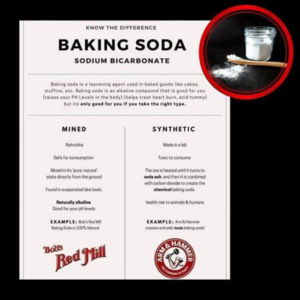
Baking soda is a leavening agent used in baked goods like cakes, muffins, etc…
It’s an alkaline compound that is good for you, but its only good for you if you take the right type.
(raises your PH Levels in the body & helps treat heart burn, acid stomach)
Mined Baking Soda, Nahcolite Safe for consumption
Mined in its’ pure, natural state directly from the ground found in evaporated lake beds.
Naturally alkaline, good for your pH levels
EXAMPLE:
Bob’s Red Mill Baking Soda is 100% Natural
Arm & Hammer is Synthetic made in a lab
Toxic to consume, the ore is heated until it turns to soda ash, then it’s combined with carbon dioxide to create the chemical baking soda. Is a Health risk to Animals & Humans
********
Baking soda (sodium bicarbonate) produced via 2 primary methods:
Mined= from Natural Mineral Deposits
Synthetically= Manufactured through Chemical processes.
Mined Baking Soda:
Sourced from trona ore or nahcolite deposits, primarilyin Wyoming and Colorado. This method is often considered more environmentally friendly and is frequently marketed as organic or aluminum-free. Bob’s Red Mill is a prominent brand that sources its baking soda from mined nahcolite.
Synthetic Baking Soda:
Produced using the Solvay process, which reacts sodium chloride (salt), ammonia, and carbon dioxide. This method allows for precise quality control and consistent purity, but has a higher industrial energy footprint. Many generic brands use this synthetic route.
Consumers often choose Mined varieties for perceived natural purity or organic certification
Whereas Synthetic versions are valued for consistent leavening power and cost-effectiveness.
*****
Natural Sugar Alternative Options:
Honey
Maple syrup
Coconut sugar
Dates
Molasses
Also plant-derived non-nutritive sweeteners Stevia and Monk fruit. These options often provide additional nutrients, antioxidants, or a lower glycemic impact compared to refined sugar, though should still be consumed in moderation.
Best substitutes by use case:
For Beverages:
Stevia, monk fruit, and raw honey dissolve easily and complement flavors without overpowering them.
For Baking:
Coconut sugar, date paste, and monk fruit blends (often with erythritol) offer bulk, browning, and texture similar to sugar.
For Blood Sugar Control:
Stevia, Monk fruit, allulose & xylitol have little to no glycemic impact. Making them suitable for diabetics or low-carb diets.
For Gut Health:
Honey and Date palm products contain polyphenols and fibers that support gut microflora and reduce oxidative stress
*****
TOP 3 TEA COMPANIES:
#3 EQUAL EXCHANGE
Pass rigorous independent testing & maintain transparent operations in Organic & Fair trade supply chains.
*****
#2 PUKKA Tea
No Glue, No Staples, No Plastic Seals. Each Tea bag, hand stitched w/Organic cotton thrread secured with no Synthetic adhesives or Chemical sealants. Cleaner from Soil to Cup.
*****
#1 TRADITIONAL MEDICINALS
Complete transparency across the entire Product line
Chamomile tea offers gentle relaxation perfect for evening
Peppermint tea aids digestion after a heavy meal
Roasted Dandelion Root stimulates digestion and supports the body’s natural detoxification process
Throat coat & Lemon varieties support Respiratory and Immune function during illness
Their B Certified Corporation meaning;
They meet rigorous standards for Human rights, Environmental responsibility and Social Fairness, NOT just in product, but across their entire business operation.
Every herbal ingredient undergoes strict testing for Heavy Metals, Microbial contamination and Pesticide residues.
Tea bags contain zero plastics and use no Polypropylene edge sealants.
The company provides documentation backing every claim.
People looking for reliable, gentle Therapeutic tea without hidden risks this is #1, with 11 Tea Brands tested.
*****
GOOD SOURCE of PROTEIN from VEGETABLES, if avoiding Lectins
Cooked spinach containing 5.3 grams
Brussels sprouts offering 3 to 4 grams per cup
Green peas providing 8.6 grams per cup
Artichokes contribute about 4 to 5 grams per cup
Kale offering 3.5 to 3.8 grams per cup
Asparagus offering 2.9 to 4.3 grams per cup
Broccoli offering 2.5 to 3.7 grams per cup
****
Lean meats
If avoiding high-lectin foods, quality protein sources include animal proteins like pasture-raised meats, fish, eggs, and A2 dairy (from goats, sheep, or specific cow breeds), which are naturally lower in lectins than plant-based options.
****
Plant-based Alternatives, consider these low-lectin proteins:
*Hemp Seeds: A complete protein rich in healthy fats and fiber.
*Spirulina: A blue-green algae that is extremely high in protein and antioxidants.
*Quinoa: A pseudograin that is a complete protein and low in lectins compared to wheat or soy. (Boil first)
*Buckwheat: A gluten-free pseudograin with solid protein content and antioxidant properties.
*Chia Seeds: Provide protein, fiber, and omega-3 fatty acids.
*Pea Protein: A popular, easily digestible protein powder derived from yellow peas.
*Water Lentil (Duckweed): A sustainable source of complete protein with low lectin levels. (Boil first)
****
*Note while legumes like;
Lentils
Edamame
Tempeh are high in lectins in their raw form,
fermented soy products (like tempeh and miso) and thoroughly cooked lentils significantly reduce Lectin content. Making them viable for many people. Avoid raw kidney beans, soybeans,wheat germ, and peanuts, as heating does not reliably eliminate lectins in peanuts